most brands have a testing process that goes something like this: make some ads, run them, look at which one has a lower CPA after a week, make more ads that look like the winner, repeat until the winner stops working, panic, start over.
this is not a testing framework. it's creative whack-a-mole. you're not learning anything systematic — you're just reacting to noise.
here's a better way.
how most brands test (and why it doesn't work)
the two most common testing mistakes:
testing too many variables at once. you launch four ads — different hooks, different formats, different offers, different visuals. one performs better. you have no idea why. so you make more stuff that looks like the winner, and you still have no idea why that works either. you've learned nothing you can apply intentionally.
reading results too early. you look at performance after three days and $200 in spend, declare a winner, and scale it. except the "winner" just had a good first day because of delivery variance, and now you've paused the ad that would have actually won if you'd waited.
statistical significance is not optional. if you don't have enough data to be confident in the result, you don't have a result. you have a guess.
the principle: one variable at a time
every test should answer one question. not five. one.
"does problem-first framing outperform benefit-first framing for our audience?" is a test. "which of these four completely different ads works best?" is not a test — it's a lottery.
when you test one variable at a time, you build actual knowledge. you learn that your audience responds to urgency but not scarcity. that video outperforms static for awareness but not retargeting. that a founder photo beats a product photo. these are insights you can use forever — not just for this campaign, but for every campaign you run afterward.
the three phases
creative testing works in sequence. the order matters.
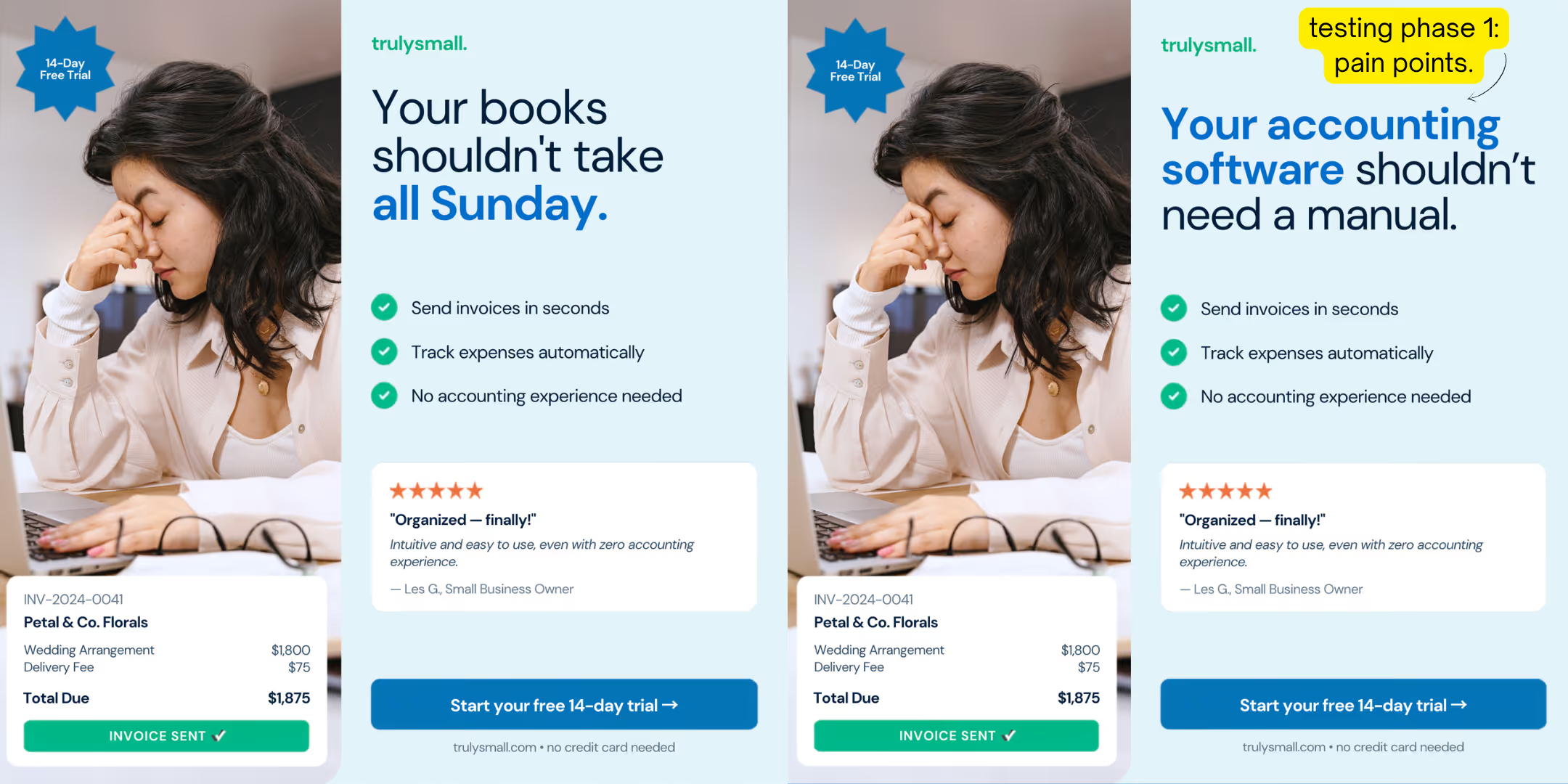
phase 1: message testing. hold everything else constant — same format, same visual style, same call to action. change only the core message. what problem are you leading with? what outcome are you promising? what angle are you taking?
run three to four message variants. wait for significance. find your winner. now you know what your audience actually cares about. this is the most valuable thing you can learn — and it informs everything else.
phase 2: format testing. take your winning message and test how it's delivered. does it work better as a static image? a short video? a carousel? a document ad? same message, different package.
phase 3: creative iteration. take your winning message and format combination and push it. new hooks, new visuals, new talent. you're not changing what works — you're extending its life and finding new expressions of it.
most brands skip phase 1 entirely and go straight to phase 3, which is why they keep making creative that doesn't build on anything.
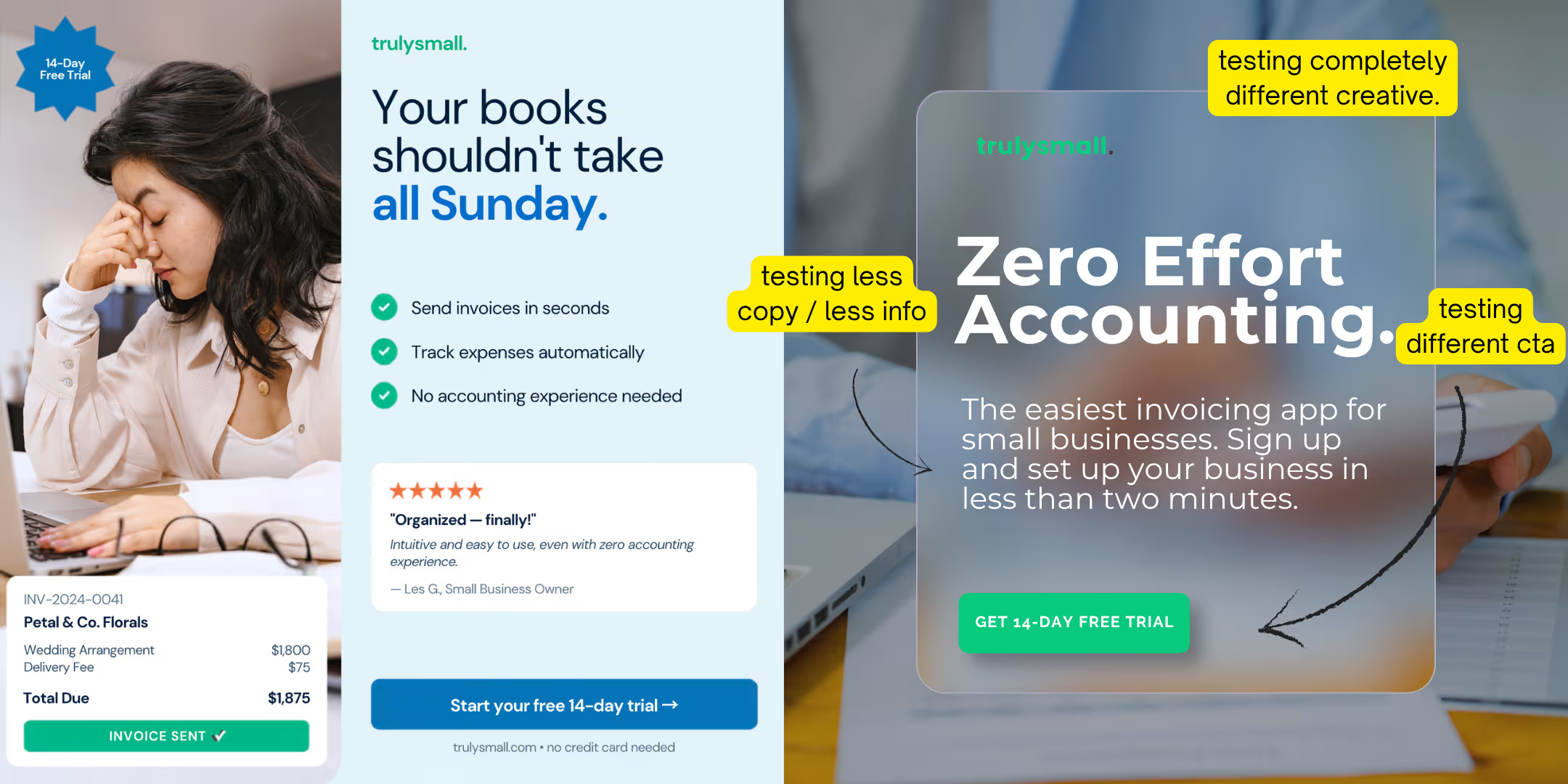
what most brands call creative testing
rotating through completely different ads with no isolated variable. you learn which ad won — not why, not what to do next.
phase 1: message testing
same format, same visuals, one variable changed. you isolate the message and find out what your audience actually responds to — before touching anything else.
reading results without lying to yourself
some guidelines for not fooling yourself:
- set your sample size minimum before you start, not after. "we'll run until we have 50 conversions per variant" is a rule. "we'll run until something looks good" is confirmation bias
- use a 95% confidence threshold for anything that informs a major creative direction. use 80% for smaller decisions where you can afford to be wrong
- look at secondary metrics when primary ones are close. if two ads have similar CPLs but one has 3x the CTR, that tells you something about attention even if it doesn't change your decision today
- don't stop a test early because you like the results. don't extend a test because you don't
the winners library
every test result — win or loss — goes into a document. not a folder of assets. a document that captures:
- what was tested
- what the hypothesis was
- what the result was
- what it means for future creative
this document is the most valuable thing your creative program produces. it means new creative decisions aren't made from instinct or from whatever performed well last quarter — they're made from accumulated knowledge about your specific audience.
most brands don't have this. the people who ran tests two years ago have left, the results are buried in campaign manager, and the team is starting from zero again. don't do that.
honest take
structured creative testing feels slower than just making stuff and running it. it's not. the brands that test systematically have a compounding advantage — every test makes the next one more informed, and eventually they're making creative decisions with a level of confidence that brands who wing it never achieve.
the brands that test randomly or don't test at all spend the same money but keep starting over. same budget, no compounding. it's the paid media equivalent of spending years at a job and learning the same year of experience twelve times.
if you want help building a testing framework for your specific channels and creative setup, let's talk. this is one of the more satisfying problems to solve.